

Agritourism Morocco: Fostering Sustainable Luxury Through Farming, Culture and Innovation
Agritourism Morocco is pioneering a new era of luxury hospitality that unites visitors with the country’s rich agricultural traditions and authentic cultural experiences. Tourism today transcends mere comfort and leisure; more visitors than ever seek genuine engagement with nature and local communities. Around Marrakech – famed for its fertile plains and rich cultural identity – agritourism has emerged as a dynamic model combining luxurious living with sustainability and heritage preservation.
1. Deliberating Agritourism in Morocco
Agritourism combines tourism, agriculture and culture into an immersive cultural experience for visitors – offering visitors the chance to explore rural life while learning traditional farming methods and tasting local cuisine and crafts. When visiting Morocco as part of an agritourism experience, guests may stay in high-end villas surrounded by olive groves, vineyards or argan orchards while taking part in farm-to-table dining experiences and guided experiences.
Moroccan countryside provides an ideal setting for this model of tourism. From its fertile Haouz Plains near Marrakech to the foothills of the Atlas Mountains, rural Morocco abounds with natural beauty as well as rich cultural traditions that need preservation; Agritourism initiatives help maintain these traditions while connecting modern travelers to rural communities.
Learn more about Morocco’s growing eco-tourism strategy from the Moroccan National Tourism Office (Visit Morocco) .
2. Exploring The Connection Between Luxury Villas and Agritourism
Modern luxury hospitality doesn’t equate with estranging oneself from nature; rather it means integrating it. Many investors and developers are realizing the potential of marrying agritourism Morocco with luxury villa design for sustainable living spaces that respect land use while honoring local identity.
Organic gardens, solar panels, grey water recycling systems and renewable materials have become standard features of high-end rural properties, offering guests five-star comfort while tasting organic produce grown onsite or participating in olive harvesting or culinary workshops.
Integration creates an unparalleled value proposition: travelers experience exclusivity and environmental awareness in one package, while for developers the agritourism Morocco model creates economic resilience by diversifying income sources – hospitality, agriculture and eco-tourism can be seamlessly combined in one project.
3. Strengthen Local Farming and Communities
At its core, agritourism Morocco involves building relationships with local farmers, artisans and residents. Many successful projects around Marrakech have established strong ties with surrounding villages so that a portion of tourism revenue remains within their communities.
Local farmers supply fresh ingredients to villa kitchens, artisans create handmade decor items, and cultural guides offer authentic experiences and storytelling. This approach strengthens Morocco’s rural economy while protecting intangible heritage such as traditional irrigation systems (“khettaras”) or ancestral olive-pressing techniques.
Such community-driven collaboration enriches visitor experiences. Not only are guests exposed to agricultural practices but they can participate in them, developing an appreciation of Moroccan craftsmanship and rural life.
4. Long-Term Sustainability Value Creation
One of the major draws of agritourism Morocco is its alignment with global sustainability goals. As environmental awareness increases, eco-friendly accommodations become more desirable among both tourists and investors.
Agritourism developments place special importance on energy efficiency, biodiversity protection, and low-impact construction. Villas constructed using locally sourced materials like tadelakt, clay and stone fit seamlessly into their environments while simultaneously reducing environmental impact while maintaining authentic aesthetics.
From an investment perspective, these projects offer long-term security. Eco-certified properties boast greater international appeal, higher occupancy rates and stronger brand positioning – qualities which eco-certified properties enjoy as an added perk. In Morocco where tourism accounts for much of GDP growth, integrating agritourism guarantees sustainable development that brings benefits both investors and communities alike.
Discover sustainable investment practices in Morocco on the Orchid Island Real Estate Guide.
5. Cultural Tourism as a Strategic Integrator
Culture remains one of the strongest pillars of Agritourism Morocco, transforming rural tourism into a richer and more differentiated experience. Beyond agriculture itself, agritourism in Morocco connects visitors to the traditions, craftsmanship, gastronomy, and architectural heritage that define the country’s identity. This cultural depth is what allows the sector to move beyond accommodation and become a complete lifestyle experience.
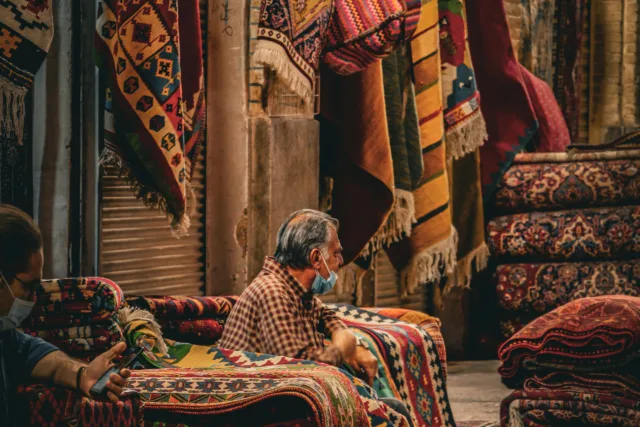
Guests staying in countryside villas, eco-lodges, or farm estates increasingly seek meaningful immersion rather than standardized travel. Their journeys often include cooking classes using freshly harvested produce, visits to traditional weekly souks, artisan workshops, tea ceremonies, or excursions to nearby kasbahs and heritage villages. These moments create emotional value that modern travelers remember long after their stay.
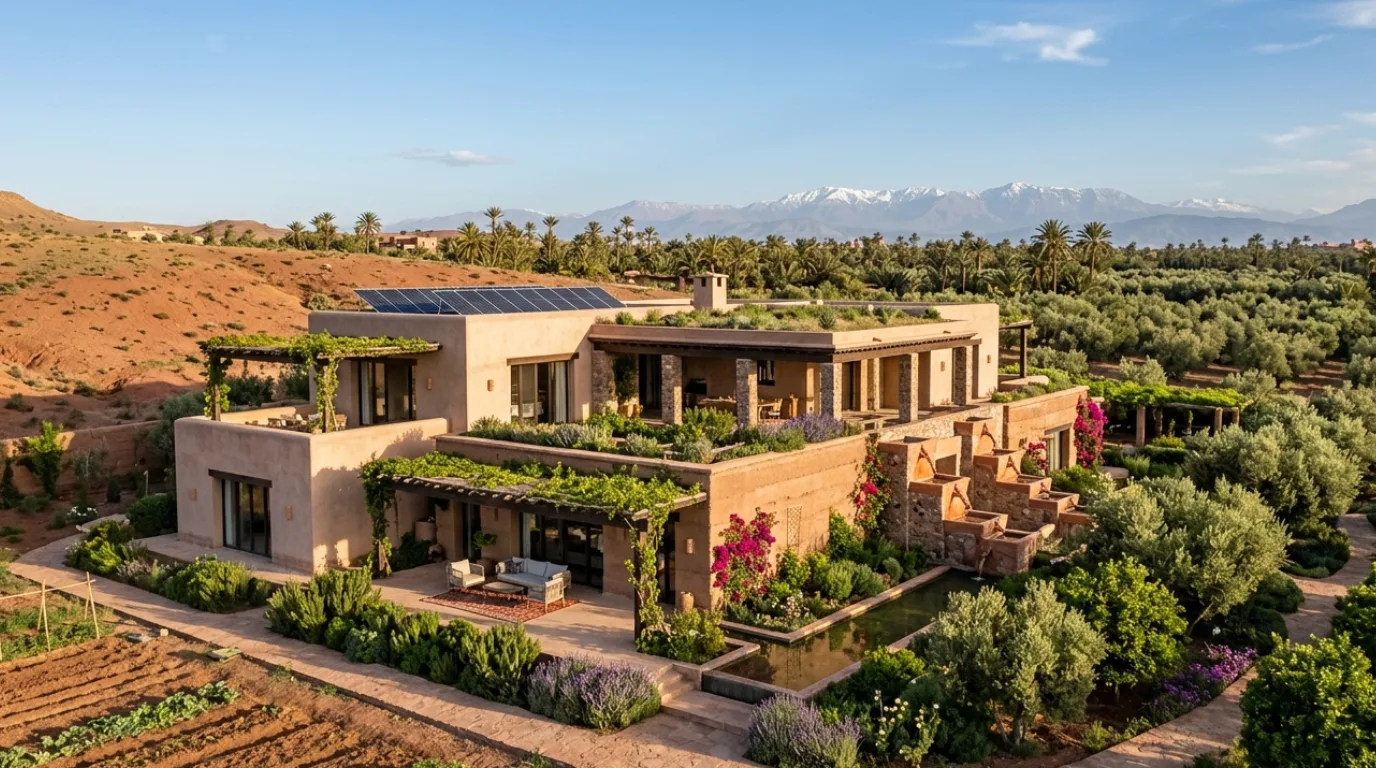
Moroccan architecture also plays an important role in this positioning. Properties designed with local materials such as stone, clay, wood, and tadelakt offer authenticity while preserving regional aesthetics. Combined with landscaped gardens, olive groves, and open-air dining spaces, these elements create an atmosphere where comfort and heritage naturally coexist.
At the heart of this experience lies the enduring strength of Moroccan hospitality. Personalized service, generosity, and warmth remain powerful differentiators in an increasingly competitive tourism market. When integrated with contemporary standards of comfort and sustainability, this hospitality model becomes a major asset for premium agritourism developments.
From an investment perspective, culture adds measurable value. Travelers are increasingly willing to pay more for authentic, experience-driven stays that reflect local identity. This strengthens occupancy potential, brand loyalty, and long-term positioning.
By placing culture at its center, Agritourism Morocco does more than attract visitors. It supports artisans, preserves traditions, encourages community participation, and reinforces pride in local heritage. In this sense, cultural tourism is not only an experience enhancer—it is a strategic integrator that aligns profitability with social and regional development.
6. Agritourism as an Investment Opportunity
Real estate and hospitality investors see Morocco’s agritourism sector as an appealing opportunity, particularly those in Marrakech, Essaouira and Atlas regions. Projects which combine luxury villas with agricultural or ecological components are becoming more desirable among investors.
Investors benefit from multiple revenue streams – accommodations, on-site production (olive oil, honey and herbs), cultural events – while appealing to eco-conscious and high spending clientele. Morocco also supports sustainable tourism through incentives and policies encouraging green architecture and rural development.
As a result, we created an investment model that balances profitability with environmental and social responsibility — an approach aligned with UNWTO’s sustainable tourism goals.
7. The Future Outlook
As climate concerns and environmental awareness shift the travel industry, agritourism Morocco looks set to emerge as a cornerstone of its tourism strategy. Combining high-end living with ecological and cultural awareness has established Morocco as a pioneering player in the eco-luxury market.
Marrakech’s future lies in projects that combine nature, comfort, and culture – projects which provide both market demand as well as contributing to Morocco’s sustainable development goals. Developers taking this holistic approach not only meet market requirements but will also contribute to Morocco’s vision for sustainable development.
Agritourism Morocco provides more than an alternative travel experience – it outlines a path for the future of luxury hospitality. By blending agriculture, sustainability and authentic cultural experiences into their practices, Agritourism Morocco could alter what high-end tourism means today.
Why Marrakech Is Becoming the Flagship Destination for Agritourism Morocco
Marrakech is increasingly emerging as one of the most strategic locations for the future of Agritourism Morocco, combining international visibility with direct access to some of the country’s richest agricultural landscapes. While many travelers know Marrakech for its luxury hospitality, medina culture, and world-class lifestyle appeal, the region also benefits from fertile plains, olive groves, citrus farms, and nearby Atlas Mountain communities that create ideal conditions for immersive rural tourism experiences.
What makes Marrakech particularly powerful within the Agritourism Morocco movement is its rare ability to bridge two worlds: urban sophistication and countryside authenticity. Within less than an hour from the city center, visitors can transition from premium resorts and vibrant souks to working farms, eco-retreats, organic estates, and nature-based hospitality concepts. This proximity gives Marrakech a unique competitive advantage, allowing travelers to enjoy both high-end city experiences and meaningful agricultural immersion during the same stay.
For investors and developers, this creates an important opportunity. Demand is rising globally for tourism models centered around wellness, sustainability, farm-to-table dining, and authentic cultural engagement. Marrakech is exceptionally well positioned to capture this demand because it already possesses strong international air connectivity, an established hospitality brand, and surrounding rural zones capable of supporting new Agritourism Morocco projects.
Recent examples near Marrakech show how former agricultural land is being transformed into hospitality concepts that combine farming, accommodation, outdoor leisure, and local employment creation. Projects integrating gardens, livestock, local cuisine, glamping, and countryside stays demonstrate how Agritourism Morocco can move beyond theory into commercially viable experiences with growing domestic and international appeal.
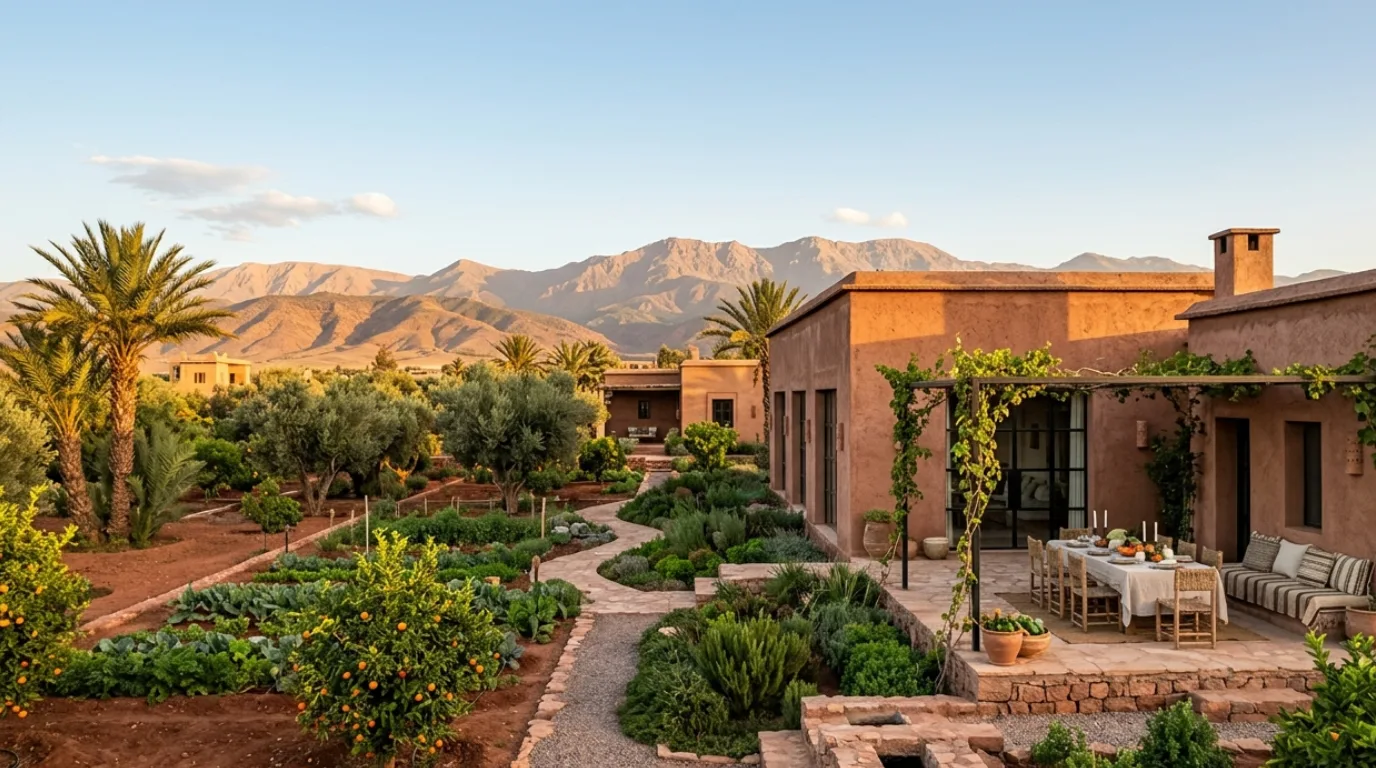
Another reason Marrakech is central to Agritourism Morocco is climate-conscious luxury. Modern travelers increasingly seek privacy and comfort without disconnecting from nature. Around Marrakech, this has encouraged the rise of villas and boutique properties featuring olive orchards, edible gardens, solar systems, local materials, and open landscapes. In this model, sustainability becomes part of the guest experience rather than a hidden operational feature.
From an economic perspective, Agritourism Morocco in Marrakech can also generate diversified revenue streams. A single asset may combine accommodation income, wellness retreats, culinary experiences, agricultural products, private events, and seasonal experiences such as olive harvests or cooking workshops. This multi-layered model can strengthen resilience compared with traditional hospitality formats dependent on room revenue alone.
Equally important is the social impact. When properly structured, Agritourism Morocco supports local ecosystems by creating employment, sourcing from nearby farmers, preserving rural know-how, and encouraging infrastructure development in surrounding communities. Marrakech’s established tourism demand gives these rural-adjacent projects faster market access than more isolated regions.
Looking ahead, Marrakech is likely to remain one of the strongest engines of Agritourism Morocco because it combines brand recognition, investor confidence, tourism demand, and agricultural heritage in one destination. For travelers, it offers richer and more authentic stays. For investors, it offers a model aligned with global shifts toward sustainable hospitality and experience-driven real estate.
In many ways, Marrakech is not only participating in the rise of Agritourism Morocco, it is helping define what the sector can become.
To better understand Morocco’s investment landscape, Visit Marrakech
Are you eager to explore investment or development opportunities in Morocco’s rapidly expanding agritourism sector?
Contact Orchid Island today and discover how you can take part in sustainable real estate projects that blend elegance, authenticity, and ecological balance across Morocco’s most captivating landscapes.

Leave a Reply