Premises
Consulting suites
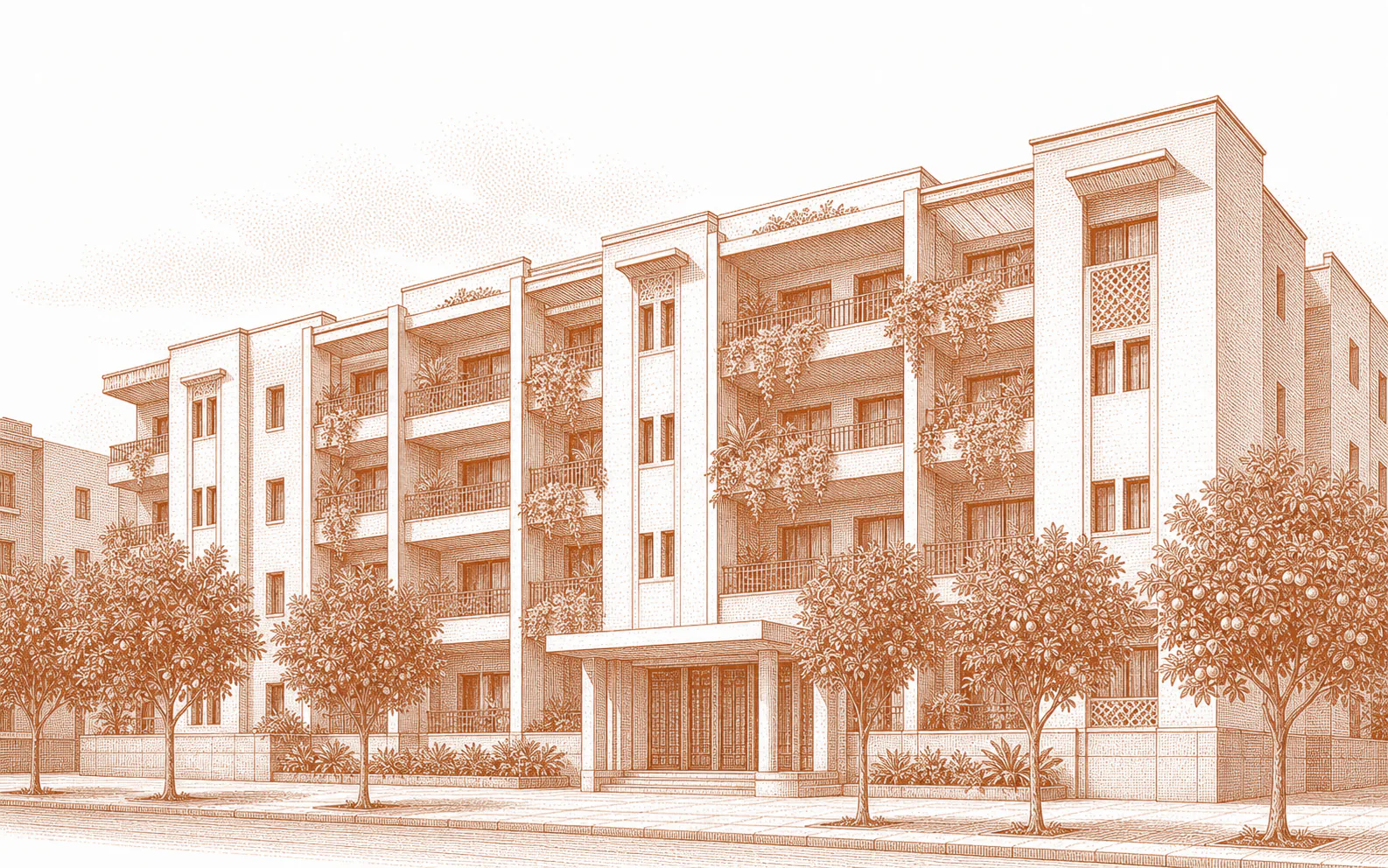
Ground floor units and full floors in Gueliz, Hivernage and the newer districts, sized for consulting rooms, imaging or a day clinic.
View premises
Consulting suites, day clinics, care residences and plots for purpose built centres in Marrakech. We handle the property side so the medical project opens on the date you promised.
Access
Arrival on foot, by car and by ambulance, with parking that still works at the busiest hour of the day.
Building
Floor loads, ceiling heights, lift dimensions, power supply and water points, measured against the rooms you plan to run.
Title
A clean land title, a permitted use that covers the activity, and the permit history of the building read in full.
Neighbours
What sits above, below and next door: noise, deliveries, waste routes and the rules the co-ownership already applies.
None of this shows in a listing photograph. We visit the address, take the measurements and put the questions to the building manager and the municipality before you make an offer.
Ground floor units and full floors in Gueliz, Hivernage and the newer districts, sized for consulting rooms, imaging or a day clinic.
View premises
Titled plots with the frontage, depth and road access a medical building needs, read against the zoning rules before you commit.
View land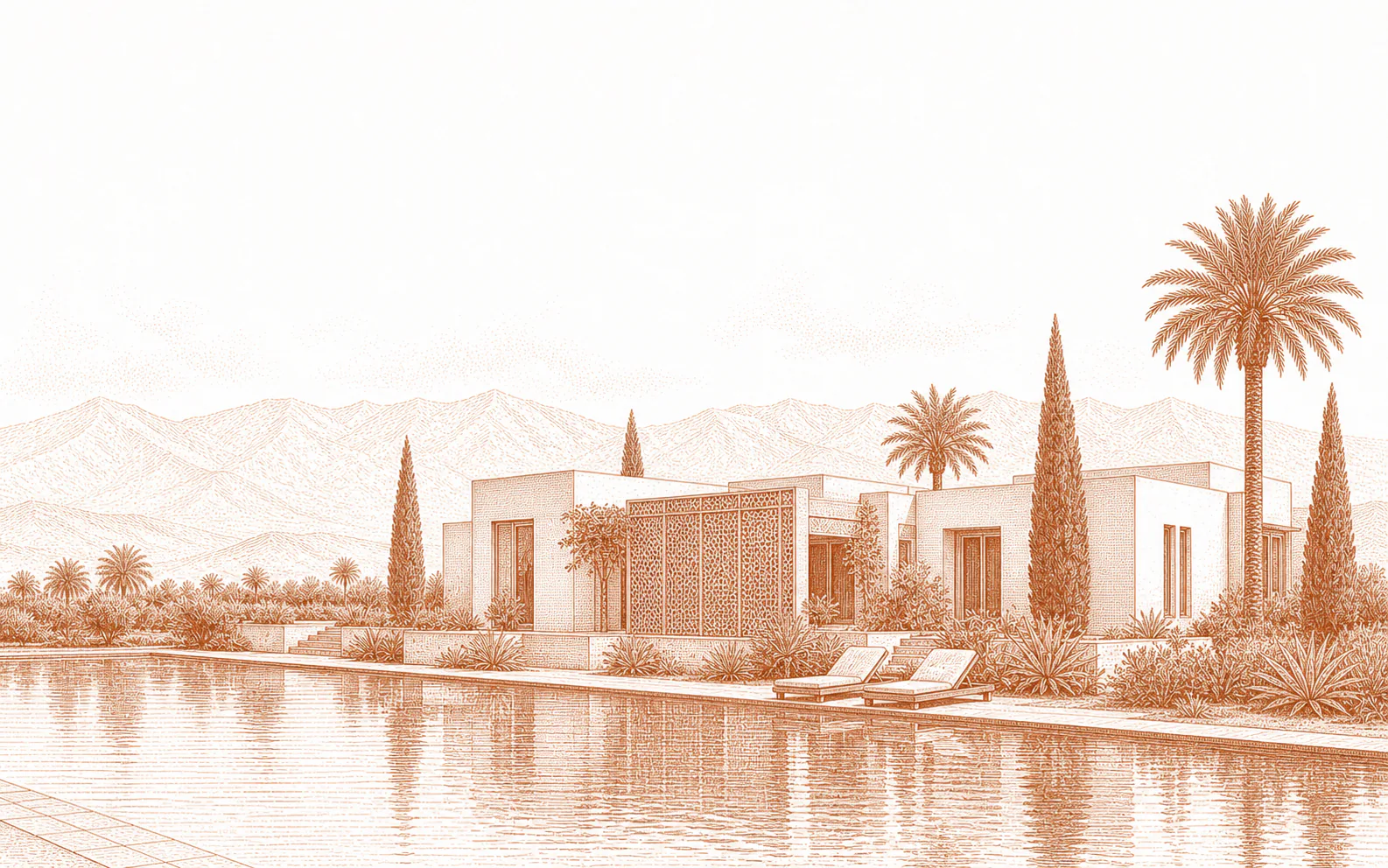
Villas and large houses that suit rehabilitation, long stays and senior care, with ground floor rooms and level access throughout.
View residencesOne advisor follows the file, from the first shortlist to the deed and the fit out.
Specialties, number of rooms, expected patient flow, staff and equipment. The requirement is on paper before anyone visits a property.
We walk the shortlist at the hours your patients would come, and check what the address feels like on arrival and on leaving.
Land title, permitted use, permit history and co-ownership rules, read in full and summarised for you in plain language.
Structure, power, water, waste routes, lift and stretcher access, step free entry. We bring the right technician for each point.
Price, split of the works, lease terms and delivery date, then the notary, the registration and the handover of keys.
Three briefs come back to us again and again. Each one needs a different property answer, and a different order of questions.

A first cabinet or a move to a larger address, on a budget that has to stay predictable from search to opening.
Clinics and laboratories opening a second or third address, where the specification is fixed and the search is about matching it exactly.
Investors who want a building held on a long lease, and need the property to match what a care operator can actually run in it.
Healthcare real estate once sat at the edge of property investment strategies. Today it is moving to the centre, for the same reasons pension funds and family offices hold it globally: an ageing population, a shift towards outpatient care, and leases that often outlast almost every other asset class.
The category reaches far beyond hospitals. It includes consultation practices and medical office buildings, day clinics built around imaging or dialysis, laboratories, pharmacies, and residences for long-term recovery or older people. What connects these assets is not the building type but the tenant: a healthcare operator whose activity does not stop when the economy slows.
Demand has followed practitioners from traditional consulting rooms into purpose-built spaces. General practitioners are replacing ageing offices with modern medical buildings that bring laboratories, imaging and specialist consultations together at one address, because that is what patients and insurers now expect.
Each asset type carries a different tenant profile, lease term and degree of technical complexity.
Consulting rooms and specialist clinics fitted for laboratories, imaging and treatment rooms rather than open-plan offices. The category's core asset, and usually the simplest to let and sell.
Primary and specialist care, imaging, laboratories, pharmacy and telemedicine under one roof. This ecosystem model improves the patient journey and strengthens the value of every unit within it.
Dialysis, chemotherapy, imaging and day surgery organised around equipment and patient throughput rather than bed numbers. Specialist assets, harder to repurpose and priced accordingly.
Medical spas, rehabilitation centres and active senior communities at the meeting point of healthcare and hospitality. The newest and fastest-growing branch of the category.
Population aged 65+ by 2030
In parts of Europe, the share of people over 65 is approaching 30% - a demand curve for outpatient care and care facilities that does not reverse.
Typical lease length
Healthcare tenants commonly sign for 9 to 12 years, compared with around three years for conventional offices, with strong commitments attached to the lease.
Yield range
Well-located medical buildings trade at yields of roughly 4.5% to 6.5%, while specialised outpatient and oncology assets can exceed 7% in suitable markets.
Stable demand in downturns
Healthcare activity does not stop when the economy slows, helping occupancy and rental income remain stable throughout the cycle.
Green hospitals: solar energy, rainwater harvesting and efficient systems are moving from optional to expected, while reducing operating costs for the operator that bears them.
Wellness real estate: medical spas, rehabilitation and supervised fitness bring healthcare and hospitality together in one asset - and one portfolio.
Regulatory complexity: fire safety, accessibility and operating authorisations sit alongside the usual use checks, with no room for shortcuts.
Technical infrastructure: backup power, medical-gas networks, filtration and stretcher-accessible lifts make asset management a specialist discipline.
The forces reshaping healthcare real estate in Paris or Milan are visible here too: a growing city, private clinics opening new locations, and practitioners seeking premises designed for the activity rather than adapted later. We bring the same rigour institutional investors expect elsewhere to a market where checks are still often done manually: the title is read in full, the building is tested against the specialty, and the lease is negotiated with the same discipline.
The question for healthcare real estate is no longer whether it has a place in a portfolio. It is how to build that place in a market growing as quickly as Marrakech, with a partner who reads the file before you sign.
Answers on the property side. Anything medical or regulatory stays with you and your own advisors.
Ask your questionNo. The permitted use recorded for the property, and the co-ownership rules where they apply, decide what can run there. We check both before an offer and tell you when a change of use would be needed.
No. Licensing and health authority approvals stay with you and your own advisors. Our work is the property: finding it, verifying it, negotiating it and preparing the deed with the notary.
It depends on how long the project needs the address and how much fit out it carries. We price both routes on the same property so the comparison is real rather than theoretical.
We introduce architects and contractors we work with, and we keep the property file, the permits and the building rules in one place while the works run. The medical layout stays with your own designers.
Weeks rather than days for premises with an ordinary specification, longer when floor loads, parking or a change of use are involved. We tell you early which of the three is the constraint.
Send the specialties, the surface you have in mind and the districts you would consider. We come back with a shortlist and what each address would take to open.