Hotels
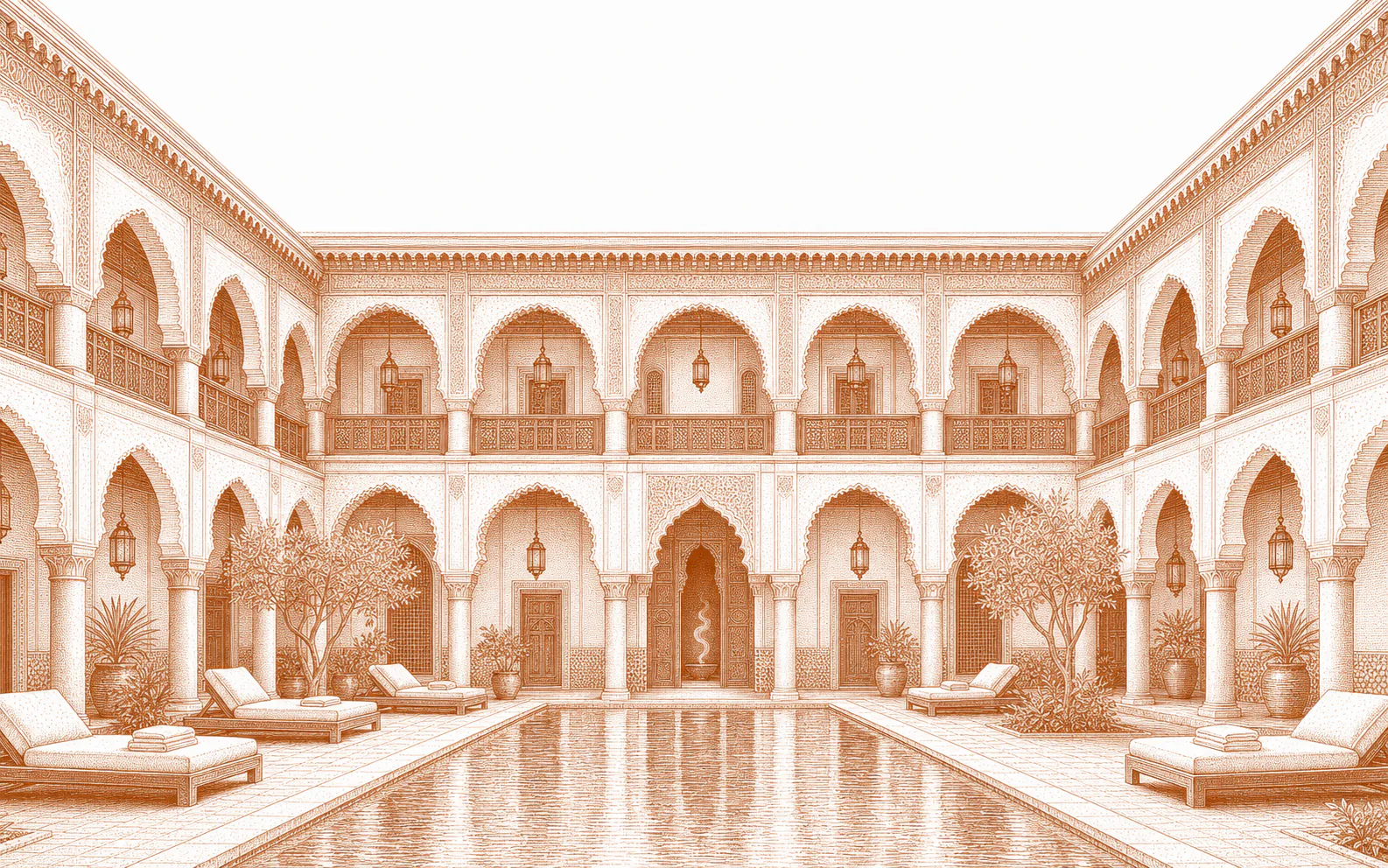
Boutique hotels
Running hotels of modest size, where the value usually sits in repositioning the offer rather than in the walls themselves.
View hotels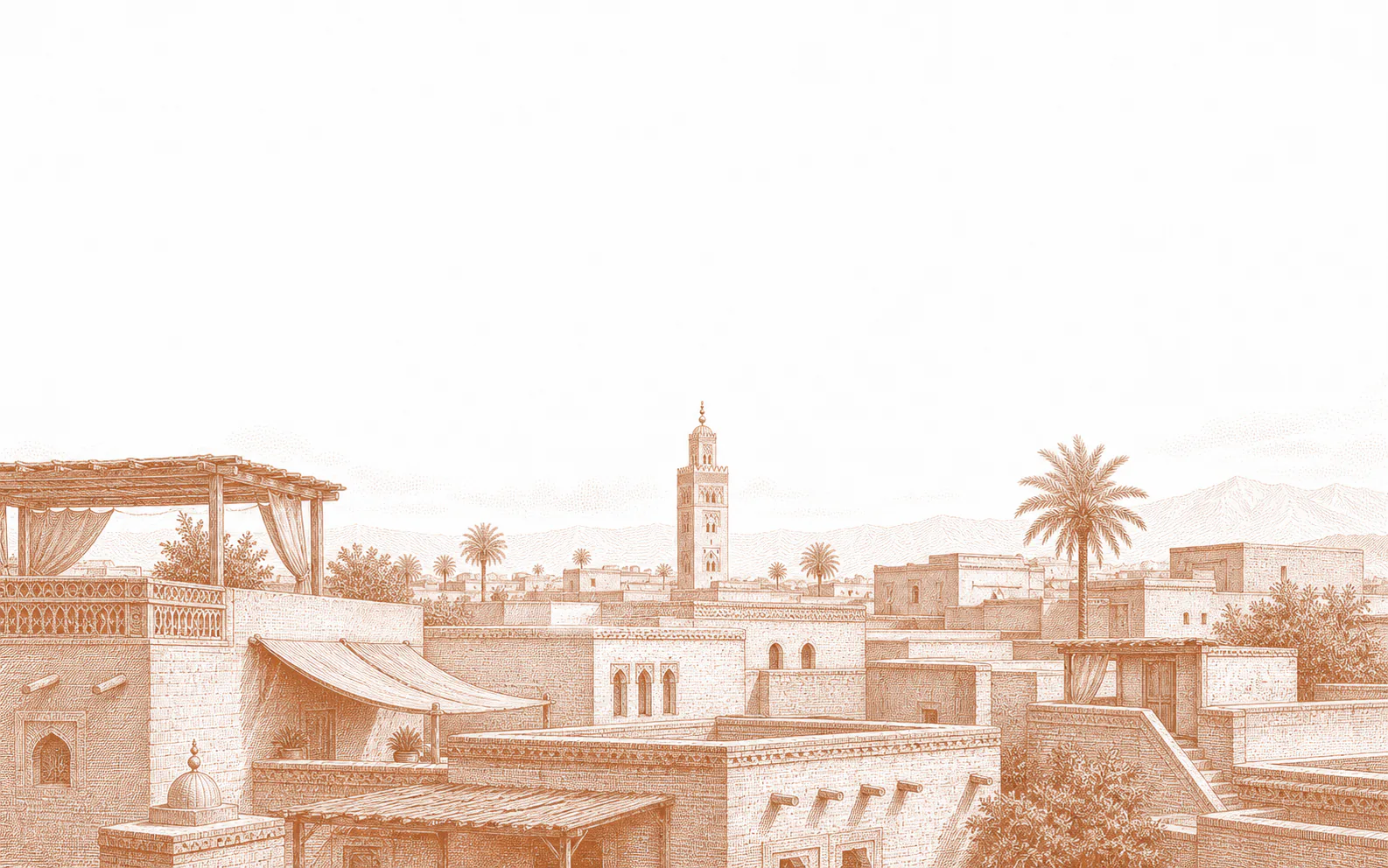
We advise buyers and owners on hospitality property in Marrakech: what the building can realistically earn, what it takes to open it legally, and who runs it once the deed is signed.
Demand
Who actually books the address, at what rate, and how the year splits between high season, shoulder and the quiet weeks.
Positioning
Licence
Classification, operating permit and safety compliance, read in the file rather than taken on the seller's word.
Compliance
Works
What the building needs to reach the standard you intend to sell, costed with a builder before the offer, not after it.
Capital
Operator
Who runs the property day to day, on what contract, and what that leaves you once payroll is paid.
Operations
Every mandate starts with these four. If one of them does not hold, we tell you before you spend anything on the file.
Marrakech trades hospitality in three shapes, and each one asks a different question of the buyer. We work on all three, and we say plainly when a building suits none of them.
Running hotels of modest size, where the value usually sits in repositioning the offer rather than in the walls themselves.
View hotels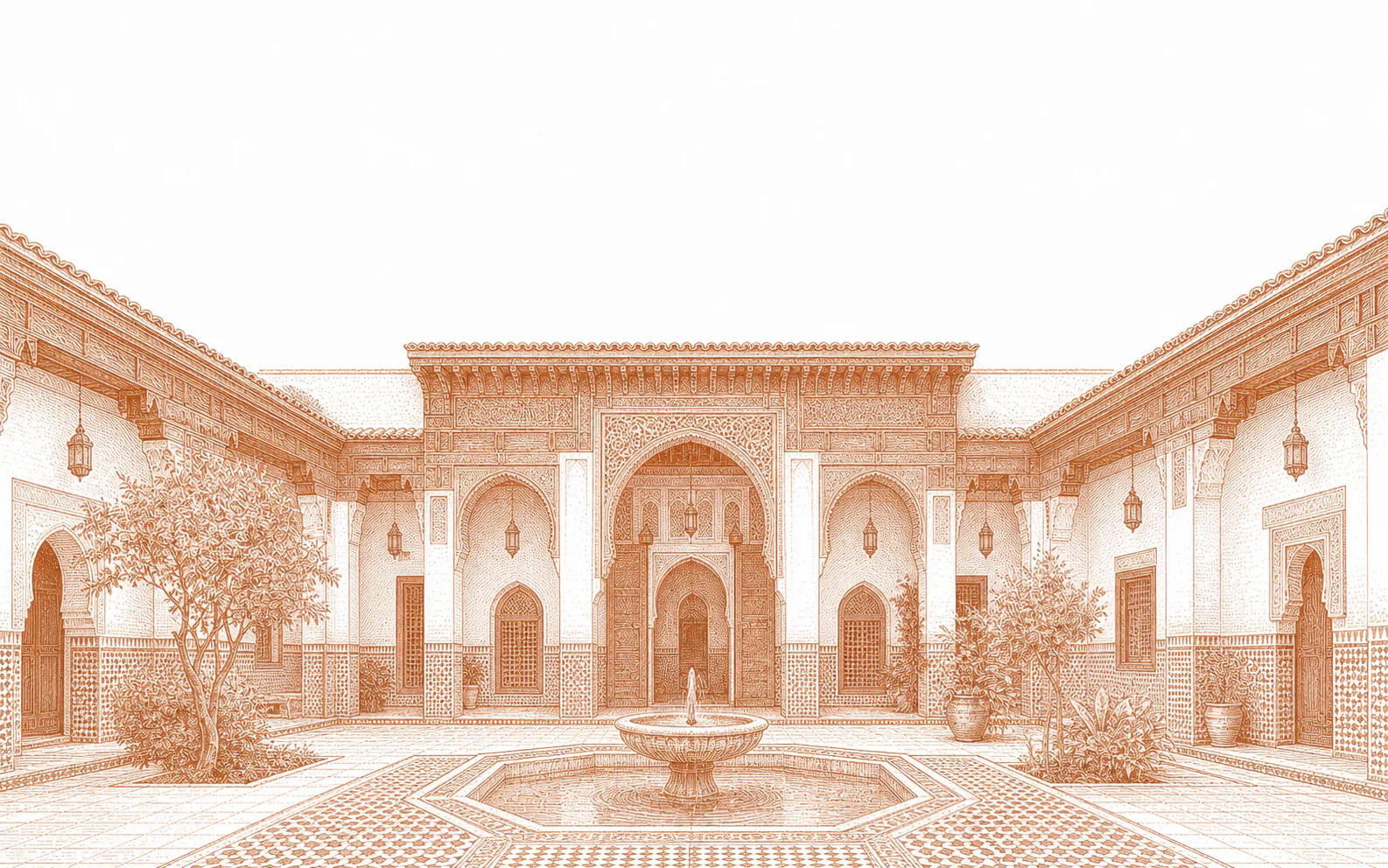
Courtyard houses inside the ramparts, sold empty or as trading maisons d'hôtes. Few rooms, close guest contact, heritage rules on every wall.
View riads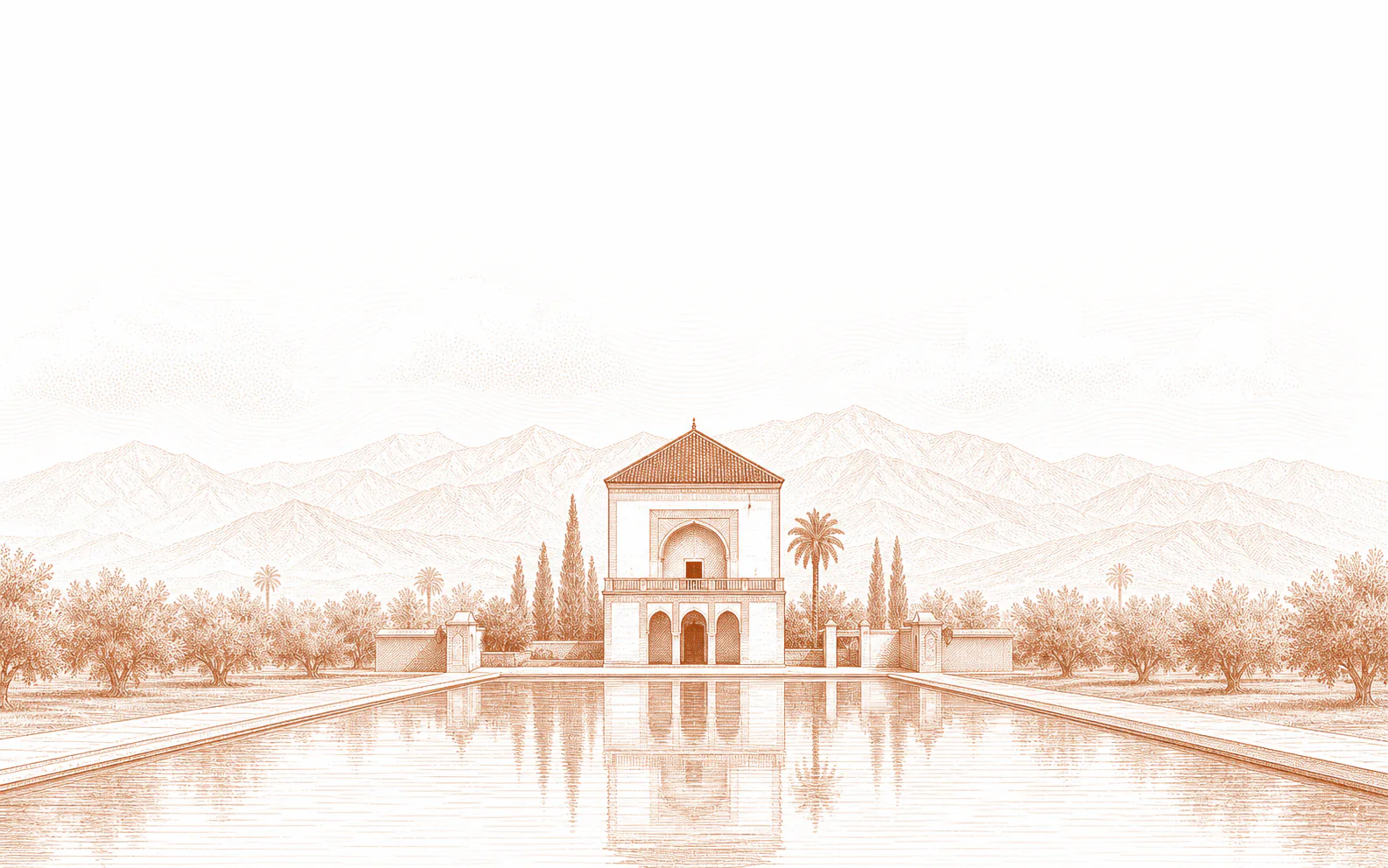
Larger sites beyond the walls with room to build: grounds, water rights, access and the setbacks a resort programme needs.
View resortsOne advisor carries the file across the whole cycle and brings in the notary, the builder and the operator at the moment each of them is useful.
Budget, target guest, room count and the return you need. We put it on paper before showing you a single property.
Listed hotels and riads, plus owners who will only sell quietly. Hospitality in Marrakech rarely changes hands in public.
Land title, built surface, classification, operating permit, safety report, staff contracts and trading history, verified by our team and the notary.
Ownership held personally or through a Moroccan company, funds wired in foreign currency through a Moroccan bank and the investment declared, which is what keeps income and sale proceeds transferable.
Works planning, operator selection and the monthly reporting you need to judge the asset from another country.
Three arrangements cover almost every hospitality deal in the city. The right one depends on how present you intend to be and how much of the operating risk you want to carry.
You hire the manager and the staff, and you keep both the profit and the risk. The usual choice for a riad of ten rooms or fewer.
Small riads
An operator runs the property under your ownership for a fee tied to revenue and profit. You keep the asset, the upside and the say over capital works.
Hotels with a name
A tenant pays rent and carries the trading risk, or you keep the operation and buy a brand with its standards and its booking system.
Predictable income
At its best, Morocco's Hospitality Real Estate market can be described as going through an exciting renaissance phase. A combination of an ever-increasing number of tourists, government's big plans, and World Cup 2030 preparations have brought the country to the top in Hospitality Real Estate Investment.
Hotel property or Hospitality Real Estate can be viewed as combining property investments and running a business. Compared to residential or office commercial properties, hotels and resorts are unique: not only do the property assets provide value, but continuous income generation is the primary key to a successful hotel asset.
Real estate developers in Morocco are increasingly turning to the Hospitality Real Estate sector as a sustainable, profitable, and appealing investment opportunity. Developers enter this segment to diversify sources of income and disperse risk when the residential market slows down. The model typically involves building hotel units and operating them through management contracts with internationally branded hotel operators.
The Moroccan Real Estate sector dedicated to hospitality covers various asset classes:
From economical to luxury properties including traditional large hotels, boutique establishments, and all-inclusive resorts.
Short-term residential properties operated via platforms like Airbnb, driving high tourist flexibility.
A residential/commercial hybrid developed for urban areas, business travelers, and long-term stays.
Integrated combinations of hotel, residential, commercial, and retail components.
Traditional Moroccan courtyard houses transformed into boutique luxury accommodations in historic cities like Marrakech and Fes.
Tourist Arrivals (2025)
Over 19.8 million international tourists visited Morocco in 2025, boosting hotel and infrastructure demand.
Global Destination Rank
Morocco climbed 3 spots globally to rank as the 22nd most visited country worldwide.
Tourism Revenues
International visitors spent $14.8 billion on lodging, dining, transport, and experiences.
Direct Jobs Generated
Employment directly supported by hotels, restaurants, travel agencies, and attractions.
Market CAGR (2025–2030)
Forecasted average annual growth rate for Morocco's tourism and hotel real estate sector.
The numbers are compelling: 60,000 newly constructed hotel bedrooms are expected to be introduced, representing a 20% expansion of current national capacity. This influx of capital creates a structural shift in Morocco's hospitality market.
The government is committing $20.0 billion to infrastructure development, including high-speed rail, airport expansions, roads, stadiums, and urban modernization, targeting 26 million annual visitors by 2030. Tourism income is projected to reach $17.14 billion by 2027 according to Bank Al-Maghrib.
“We view the 2030 FIFA World Cup as an engine, rather than the end goal itself.”
Fatim-Zahra Ammor
Minister of Tourism
Alliances Développement Immobilier partnered with Rixos Hotels to invest $320 million in luxury projects including Rixos Marrakech (400+ rooms and 60 villas), Alliée Marrakech, and Rixos Lixus Larache, introducing Morocco's first Luxury All-Inclusive resorts.
Groupe Mfadel in Casablanca is unveiling Radisson Blu (5-star, 131 rooms), Radisson Red (4-star, 177 rooms), and a 4-star Radisson Blu aparthotel set for 2028.
TGCC developed landmark projects such as Three Seasons in Rabat, Hilton Arzana, and Al Houara Coastal Resort in Tangier.
Hilton launched the Waldorf Astoria Rabat Salé in the Mohammed VI Tower and plans DoubleTree & Curio Collection properties in Marrakech by 2029. Radisson Hotel Group aims for 30 hotels by 2030, Wyndham is accelerating franchise expansion, and Barceló operates 10 properties across 6 cities.
Risma acquired Radisson Blu Hotel Marrakech and Carré Eden Shopping Center for $57.2 million, demonstrating institutional confidence in Marrakech.
Institutional funds are turning to Morocco as Africa's premier travel destination. With 75 properties and 10,606 rooms under development (+27% YoY), Morocco holds Africa's second largest hotel development pipeline after Egypt. Casablanca accounts for approximately one third of all hotel units currently under construction.
Orchid Island connects deep local market expertise with international investment standards across 50+ countries. We provide full-lifecycle hospitality advisory: feasibility studies, financial modeling, brand positioning, operations strategy, due diligence, legal structuring, and AI-driven market analytics for boutique hotels, riads, luxury resorts, and prime development land.
Morocco's hospitality real estate sector is undergoing a profound transformation. Unprecedented tourist growth, massive infrastructure commitments, and quality-oriented developments offer an extraordinary opportunity for institutional and private investors.
Licensing, transfers and running a property from abroad, answered plainly and without jargon.
Talk to our teamHospitality Real Estate includes properties that provide accommodation, food, and guest services: such as hotels, resorts, serviced apartments, and vacation rentals. These properties generate revenue through lodgings, food and beverage, and related hospitality operations.
Investing in Hospitality Real Estate in Morocco is highly attractive due to rapid tourism growth, major national infrastructure developments, supportive government policies, and an ever-increasing influx of international visitors.
The Moroccan market includes commercial hotels, beach and urban resorts, boutique riads and guesthouses, serviced apartments, vacation rentals, and mixed-use hospitality developments across major cities and top tourist destinations.
Orchid Island provides a full range of hospitality advisory services including acquisitions and disposals, feasibility studies, financial modeling, development consulting, due diligence, asset management, and transaction structuring.
Yes. Tourist accommodation in Morocco operates under a permit and is classified by the tourism authorities, with rooms, safety, sanitation and staffing all inspected. We read the file, or note its absence, before an offer is written.
Not automatically. Classification is granted to an establishment and its operator, so a change of hands generally means a fresh application. We plan the sequence so the property stays closed no longer than it must.
Yes. Non-residents buy and hold urban property in Morocco freely. Hospitality assets are usually held through a Moroccan company for operating, staffing and tax reasons, and your notary and accountant set that structure with us.
We will not quote a figure before seeing the building. Hospitality returns come from occupancy, average rate and payroll together, and those depend on the address, the room count and who runs it. We model the three on real trading data where the seller can produce it, and say so when they cannot.
Enough that it should be priced before you commit. Old structures hide damp, wiring and roof work, and heritage rules limit what you may change on a facade or a terrace. We bring a builder, and an architect where the plan needs one, to the second visit.
Oui. Quel que soit le mode d’exploitation retenu, le reporting est fixé dès le départ : occupation, prix moyen, charges et travaux, tous les mois, par un interlocuteur nommé qui était présent à l’acquisition.
Send us the property you are evaluating or the project you are developing. You will receive our written assessment before signing any contract.